The Real History Behind New Orleans’ Mardi Gras
#Collaborative post
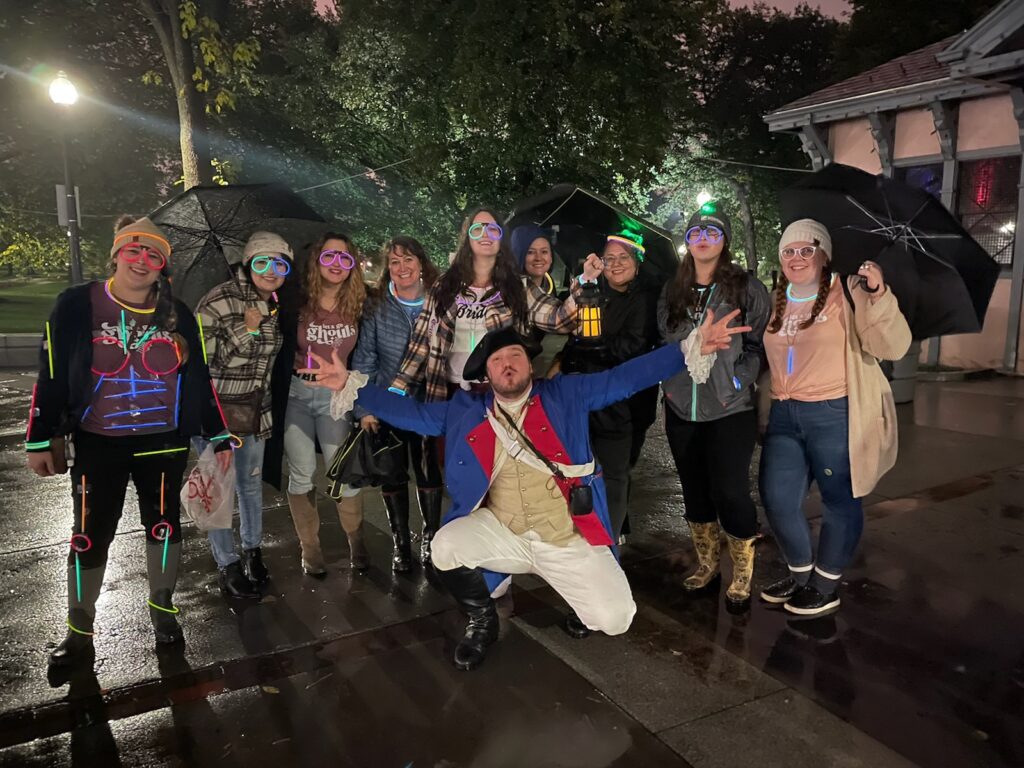
Copyright US Ghost Adventures
If you think Mardi Gras is just a modern excuse to collect plastic beads, eat your weight in King Cake, and party on Bourbon Street, you are only half right. Okay, maybe three-quarters right about the King Cake part.
But underneath the glitter and neon lights lies a fascinating, centuries-old history. New Orleans didn’t invent this giant party out of thin air. It evolved from medieval European traditions, survived strict religious crackdowns, and was ultimately reshaped by secret societies.
To truly understand the fabric of the Crescent City, you have to look beyond the modern parade barricades and dive into the wild, mysterious history that still reverberates in the streets today.
How a French Feast Created Mardi Gras
To understand New Orleans’ Mardi Gras, we have to look back at its French Catholic roots. “Mardi Gras” translates to “Fat Tuesday.” Historically, it was the final day of the Carnival season, one last massive blowout where people gorged themselves on all rich, fatty foods before they gave up those delights for the 40-day fasting period of Lent. It also offered an opportunity to use all perishables, like butter and eggs, so they wouldn’t go to waste.
The holiday officially arrived in Louisiana in early 1699, when French explorers Pierre Le Moyne d’Iberville and Jean-Baptiste Le Moyne de Bienville set up camp about 60 miles south of where New Orleans sits today. Realizing it was the eve of Fat Tuesday back home, they named their landing spot Point du Mardi Gras.
When Bienville founded New Orleans a few decades later in 1718, the celebrations naturally moved with him. Early New Orleans Mardi Gras wasn’t about massive floats, though. It consisted of elegant society balls juxtaposed with rowdy, masked street parties.
Today, you can still trace this culinary history through the city’s unique flavors. Joining a local culinary food tour through the French Quarter is one of the best ways to experience how French, Spanish, African, and Caribbean cultures melted together to create iconic Carnival dishes.
Walking these historic streets with a guide lets you sample authentic Creole gumbo and learn why King Cake is strictly forbidden after Fat Tuesday passes (hint: it has everything to do with Lent).
Secret Societies Save the Party
By the early 1800s, when the Americans took control of New Orleans after the Louisiana Purchase, Mardi Gras was in serious trouble. The new authorities found the chaotic, mask-wearing street mobs dangerous and destructive. There were constant pushes to ban the holiday altogether.
The celebration was ultimately saved by secret societies known as “Krewes.” In 1856, a group of six Anglo-American transplants formed the Mystick Krewe of Comus. They wanted to transform the rowdy holiday into something organized, beautiful, and “civilized.” They introduced themed, torch-lit nighttime parades with elaborate floats, successfully turning random street spectacles into public theatrics that local authorities could actually embrace.
In 1872, the Krewe of Rex forever altered the visual identity of Carnival. They introduced daytime parading to make the festival accessible to families, created the legendary “King of Carnival,” and established the official Mardi Gras colors we see everywhere today: purple for justice, green for faith, and gold for power.
The evolution of the parade route took another massive step forward in 1909 with the founding of the Zulu Social Aid & Pleasure Club. Established by the city’s African American community, Zulu brought rich jazz traditions, deep neighborhood charity, and highly coveted throws crafts to the mainstream Mardi Gras celebration.
As these parades grew in popularity, they illuminated a city often shadowed by its persistent dark, dramatic, and mystical past. Centuries of yellow fever epidemics, devastating fires, and deep-seated Voodoo roots left behind a heavy spiritual footprint.
If you wander the French Quarter after the sun goes down, taking a twilight ghost tour is a thrilling way to see how the city’s supernatural folklore intertwines with its festive history, revealing the eerie legends that live behind those famous iron-lace balconies.
The Modern Celebration: Why We Still Party
Today, Mardi Gras is a multi-million-dollar cultural phenomenon. It endures because it’s a fundamental part of New Orleans’ identity. For locals, it’s a season of community, family reunions, and artistic expression.
While the major parades draw millions to the main avenues, the historic French Quarter remains the epicenter of the city’s timeless, atmospheric charm. Even outside of peak parade days, the festive spirit still circulates through the city’s claustrophobic streets and historic taverns.
To really soak in that persistent, lively energy, jumping on a haunted pub crawl is the ultimate way to blend the city’s past and present. You can grab a famous local cocktail, like a Sazerac or a Hurricane, in a “go-cup” and toast to yesteryear inside establishments that have been operating for centuries, many of which claim to host resident ghosts from the early days of Carnival.
Whether you are dodging flying beads or sipping a drink in a centuries-old pub, New Orleans’ Mardi Gras is proof that a great party can outlive empires, fires, and prohibitions.
Pro Tip for Travelers: Mardi Gras isn’t just a single day. It’s a week-long season. If you want the historic charm without the chaotic, million-person crowds, visit during the “Krewe de Vieux” weekend (usually a few weeks before Fat Tuesday) for satirical, neighborhood-centric parades that capture the true, gritty, creative heart of the city.

