New Build Snagging Checklist: What to Check When You Move Into a New Home
Moving into a brand-new home is incredibly exciting. Everything is fresh, the kitchen has never been used, the carpets (if you are lucky to have them!) are clean, and you finally get to start making the space your own.
But one thing I have learned since moving into our new-build home is that brand new doesn’t necessarily mean everything is perfect.
Even when a house looks beautiful, there can be little things that need attention. From missing fittings and decorating marks to doors that don’t quite close properly, it’s worth taking the time to check everything. I know what it’s like: your demo day comes around and you have spent weeks, if not months, waiting to step through your front door.
Then you end up being blown away by everything, and you miss all those minor things.
Whether you are moving into your first new-build property or upgrading to a bigger family home, having a new-build snagging checklist can make the whole process a little easier.
Here are the things I would recommend checking when moving into a new-build home.
What Is Snagging on a New Build?
Snagging is the process of identifying small defects, unfinished jobs or problems within a newly built property that need putting right.
These might be things that you notice immediately, such as a scratched worktop, or smaller issues that only become apparent once you start living in the property.
Your developer should have its own process for reporting snags, so make sure you understand how to raise issues and keep a record of everything you report.
One tip I would highly recommend is taking pictures of any snag you have and reporting these straight away. With Bloor, we report to a customer service team which allows us to have a timestamp on when that snag was first reported.
Your New Build Snagging Checklist
I would recommend working through your home room by room rather than trying to remember everything as you walk around. On our demo day, we spent time with the developers learning about the house, and then we had the house to ourselves to go room by room, armed with a notepad and camera!
One thing I would say: we found a fair few snags, yet still paid for a pro snagger to come in, and from there we had more minor issues to raise.
1. Check All the Doors and Windows
Start with all the doors and windows throughout the property.
Check that:
- All doors open and close properly.
- Door handles and locks work correctly.
- Internal doors aren’t sticking or catching.
- Windows open, close and lock securely.
- Window frames aren’t scratched or damaged.
- Seals around windows and doors look neat and complete.
- There are no obvious draughts around closed windows.
It might seem like a small thing, but a door that doesn’t close properly can become incredibly annoying when you’re living with it every day.
2. Look Carefully at Walls, Ceilings and Paintwork
When a house is empty, it’s much easier to spot decorating problems.
Look for:
- Uneven paintwork or missed patches.
- Scuffs and marks on walls.
- Cracks or damaged plaster.
- Poorly finished corners and edges.
- Wallpaper or sealant that has been applied unevenly, where applicable.
- Gaps around skirting boards and architraves.
- Paint on fixtures such as switches, doors and tiles.
Take photographs of anything you find so you can show your developer exactly where the problem is. If you have paint issues, I would recommend getting some blue masking tape to just pop on the wall or woodwork to highlight this. It can be very difficult to remember just which part of the white wall had a defect in a house full of white walls!
3. Check the Kitchen
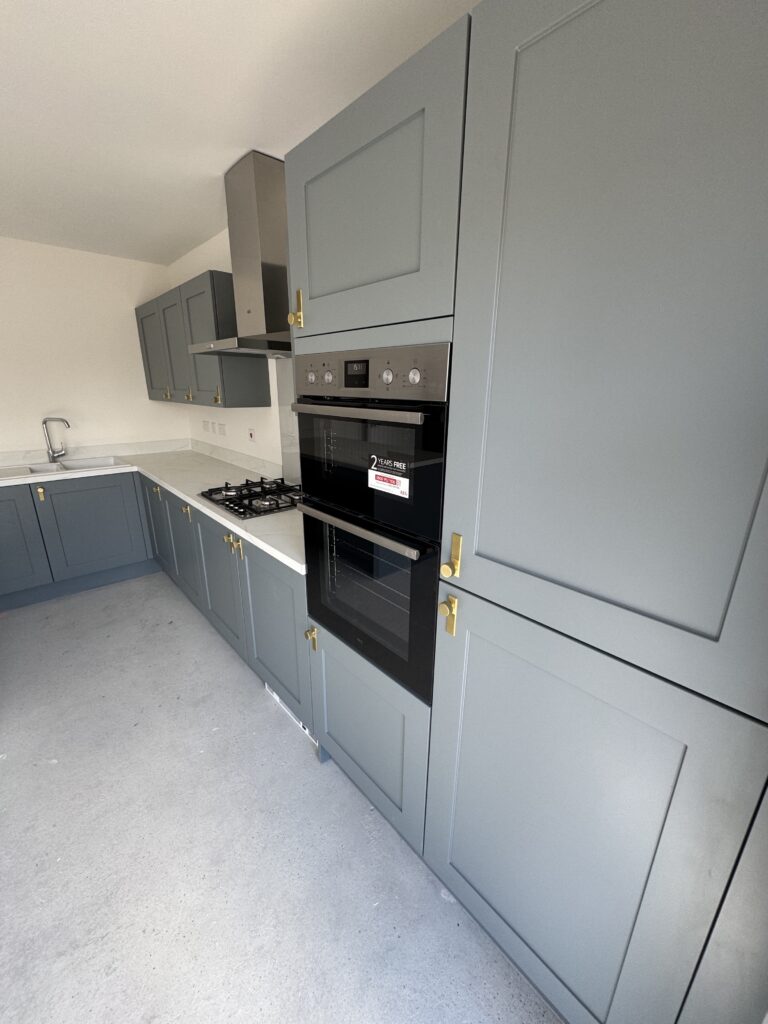
The kitchen is one of the most important rooms to check, particularly as there are so many fittings and appliances.
Make sure you:
- Open every cupboard and drawer.
- Check that hinges and handles are secure.
- Look for scratches or chips on cupboard doors.
- Check worktops for damage.
- Make sure drawers open and close smoothly.
- Check that the sink and taps work properly.
- Look underneath the sink for leaks.
- Check that integrated appliances are installed and working.
- Make sure any agreed extras have been fitted.
Don’t forget to check the details in your specification and reservation paperwork. If something was included in your purchase, make sure it has actually been installed.
4. Check Bathrooms and Toilets
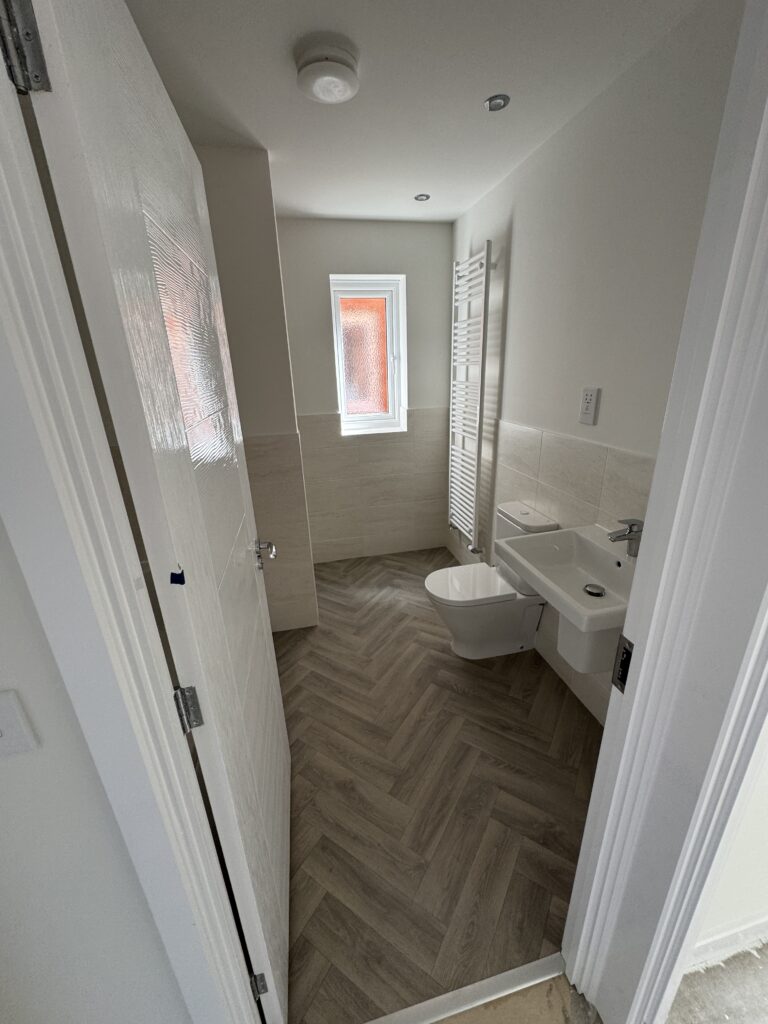
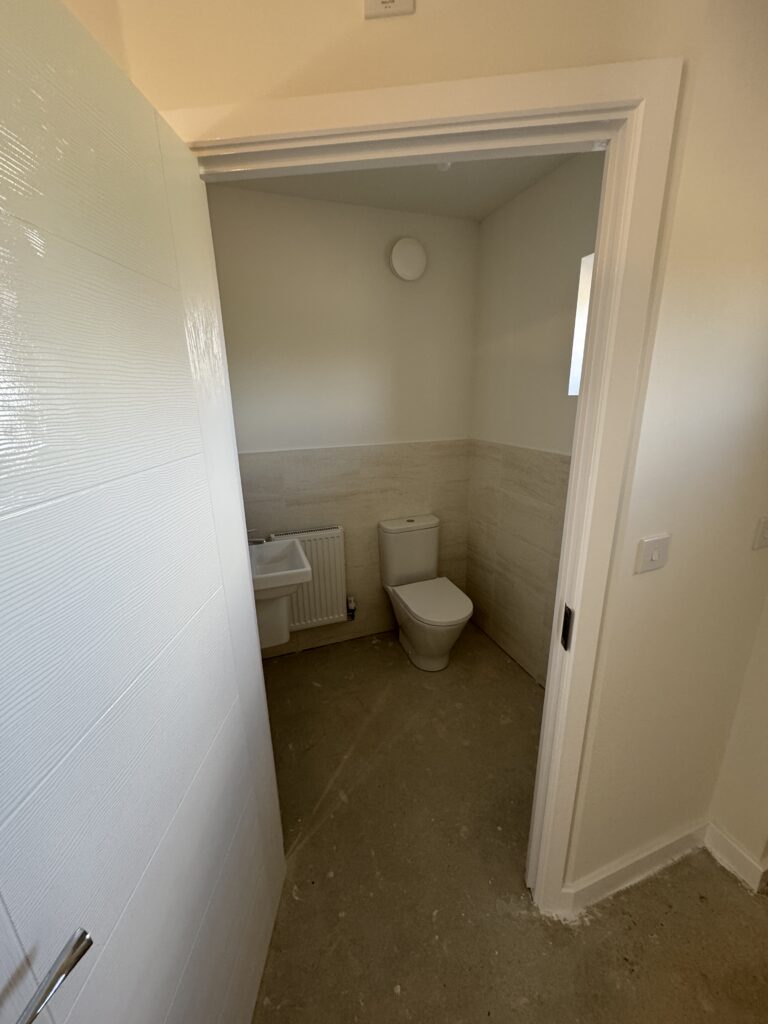
Bathrooms are another area where it’s worth spending a little extra time.
Check:
- Toilets flush properly.
- Taps work and have the correct hot and cold water supply.
- Showers work as expected.
- Water drains away properly.
- There are no obvious leaks around toilets, sinks or baths.
- Sealant around baths, showers and sinks is neat and complete.
- Tiles aren’t cracked or damaged.
- Extractor fans work.
- Bathroom fittings are secure.
If you notice water escaping or signs of a leak, report it promptly rather than waiting for your next inspection.
5. Test All Electrical Points
Don’t assume that every socket, switch or light fitting has been installed exactly where it should be.
Walk around each room and check:
- Light switches work.
- All fitted lights operate.
- Plug sockets are secure and undamaged.
- Outdoor lights work, if fitted.
- Extractor fans operate.
- The doorbell works.
- Any agreed TV, media or data points are present.
It is also worth checking your electrical specification against what has actually been installed.
6. Check Heating, Hot Water and Ventilation
You don’t want to discover a problem with your heating system when the colder weather arrives.
Check that:
- The heating system switches on.
- Thermostats respond to adjustments.
- Radiators or other heating outlets work.
- Hot water is available.
- The boiler or heating controls have been explained to you, where applicable.
- Ventilation systems work as expected.
If you aren’t sure how something operates, ask the developer for an explanation rather than guessing.
7. Inspect the Flooring and Skirting Boards
Flooring can be expensive to replace, so check it carefully.
Look for:
- Scratches, chips or damage.
- Uneven flooring.
- Loose or lifting edges.
- Poor joins between different floor coverings.
- Damaged skirting boards.
- Gaps around doorways and thresholds.
Make sure you also check any flooring upgrades or extras you paid for.
8. Don’t Forget the Outside of Your New Home
It’s easy to concentrate on the inside, but the outside deserves just as much attention.
Check:
- External doors and locks.
- Brickwork and pointing for visible defects.
- Gutters and downpipes.
- Paths and driveway.
- Fencing and gates.
- External taps, where fitted.
- Drain covers and visible drainage.
- Any garden areas included in your purchase.
For anything that looks like a drainage, structural or safety issue, report it to the developer promptly.
Don’t Forget the Little Things!
Some of the most frustrating things to discover after moving in are the smaller details.
These are the things I would add to my checklist:
- Are all the keys present?
- Have you received the appliance instruction manuals?
- Have you been given the heating and thermostat instructions?
- Are all the agreed sockets and media points installed?
- Are the correct taps, handles and fittings in place?
- Have all the agreed extras been completed?
- Are smoke and carbon monoxide alarms fitted where required?
- Have you received the relevant warranty and handover documents?
It’s worth comparing everything against your original specification and paperwork.
What Should You Do When You Find a Snag?
The most important thing is to document everything.
I would recommend creating a simple spreadsheet or document with four columns:
| Room | Problem | Photograph | Reported to developer |
|---|---|---|---|
| Kitchen | Scratched cupboard door | Yes | No |
| Bedroom | Door sticking | Yes | Yes |
| Living room | Missing media point | Yes | No |
Take clear photographs, include the date and keep copies of any emails you send.
Use your developer’s official reporting process and ask for confirmation that each issue has been logged.
If you are concerned about a more serious defect, seek appropriate independent advice. Don’t assume every issue is covered by the same warranty or timescale.
Should You Pay for an Independent Snagging Survey?
You can carry out your own checks, but an independent snagging survey can be useful if you want a professional to inspect the property.
A snagging inspector may spot issues that you wouldn’t necessarily notice yourself, particularly with things such as finishes, fittings and building details.
If you decide to use one, check their experience, qualifications, insurance and exactly what their inspection includes.
It’s also worth checking your new home warranty provider’s requirements and your developer’s procedures for reporting problems.
Final Thoughts: Take Your Time Checking Your New Home
Moving into a new-build home is a big milestone, and it’s easy to get caught up in the excitement of unpacking, decorating and making everything feel like yours.
However, taking a little time to check your home properly can save frustration further down the line.
I would recommend keeping your checklist somewhere handy, working through each room and reporting anything you find as soon as possible.
A brand-new home should be somewhere you can enjoy living, not somewhere you spend months chasing things that should have been finished properly in the first place!
Have you moved into a new-build home recently? What was the strangest or most frustrating snag you discovered? I’d love to hear about your experiences in the comments.

