New Year Home Organisation: Easy Wins for Busy Families (UK)
#Collaborative post
With Christmas behind us, lots of us start (or at least think about) a New Year home organisation reset to get the house back in order and make day-to-day life feel a bit calmer.
It’s that slightly bittersweet moment where we pack away the cosy comfort of Christmas and bring back a bit more space and routine — especially once school and work schedules kick in again.
If you’re also trying to tackle teen clutter this month, you might like my post on teen storage solutions for UK family homes.
Quick New Year home organisation wins (10–20 minutes each)
If you’re short on time, start with these quick wins:
- Set up one front door drop zone for shoes, coats and bags
- Do a 10-minute declutter sprint (timer on, one room only)
- Clear one hotspot surface (kitchen side, dining table, hallway unit)
- Create a paperwork tray (to sort once a week)
- Reset the lunch/snack cupboard so weekday mornings are easier
- Put a laundry basket where clothes actually land
- Make a charging station (so cables stop migrating)
- Start a 5-minute evening reset (floors clear + bags packed)
New Year home organisation: the “easy wins” plan (start here)
Pick your goal (calmer mornings, less clutter, easier cleaning)
Before you jump in, decide what you actually want to achieve.
Do you want calmer mornings (so it doesn’t feel like a whirlwind getting everyone out of the door)? Or do you want weekends to feel more relaxed because you’re not constantly playing catch-up?
Whatever your reason, pick one main goal first — it makes it much easier to decide what to tackle (and what to ignore for now).
The 15-minute reset (timer, music on, everyone helps)
Little bursts of effort usually work better than sacrificing a whole day.
Set a timer for 15 minutes, stick some music on, and do a quick reset. It could be a speedy bathroom clean, clearing the kitchen sides, or simply moving all the “odds and sods” back to where they belong.
If you’ve got kids or teens at home, give everyone one small job — it’s amazing how much you can shift in 15 minutes when it’s not all on you.
What to do first (and what to ignore for now)
If you’re feeling overwhelmed, start with the areas that affect your day the most:
- The front door/hallway (getting out of the house)
- The kitchen (meals, lunches, constant traffic)
- Paperwork and school stuff (mental load)
And for now? Ignore the “perfectly organised cupboards” you never open. You’re aiming for a home that runs better — not a showroom.
Easy win #1: Do a quick declutter sweep (without making a bigger mess)
The 3-bag method (keep/donate/bin)
Grab three bags (or boxes):
- Keep – but only if it has a home or a regular use.
- Donate – good condition, someone else will use it.
- Bin/recycle – broken, expired, or genuinely not usable. Don’t hang onto something you are not going to use.
This stops the declutter from turning into piles that sit around for weeks or if your house is like ours, it ends up in the loft or in a cupboard somewhere!
Where clutter builds up most in family homes
If you’re not sure where to start, these are the usual clutter hotspots:
- Kitchen worktops
- Dining table
- Hallway/entryway
- The “random chair” in bedrooms
- School bags and PE kit areas
If you want more ideas, I’ve shared a full list of clutter hotspots in your home that are worth tackling first.
Pick one hotspot and do a quick sweep; little and often is so much more manageable than trying to tackle it all in one go.
What to do with “I don’t know” items (the maybe box)
For anything you’re unsure about, use a maybe box.
Label it with a date (for example, 30 days from now). If you haven’t needed anything in it by then, donate it.
Sometimes you will find a use for an item during that time, but most of the time we end up with lots of little bits that we don’t actually have a need for, yet it may be useful for someone else.

Easy win #2: Set up 3 family drop zones (so stuff stops landing everywhere)
A drop zone is just a designated place where everyday items live, so they don’t get dumped on random surfaces. For busy families, this is one of the quickest home organisation wins because it reduces clutter and makes mornings smoother. Start with three simple zones (front door, kitchen and bedrooms) and keep them easy enough that everyone can use them without thinking.
Front door drop zone (shoes, coats, bags)
A simple drop zone by the front door saves so much stress on school and work mornings because everyone knows exactly where their essentials live. The goal isn’t perfection — it’s stopping coats, shoes and bags being dumped in different rooms.
Aim for:
- A basket for hats, gloves and scarves
- Hooks for coats (ideally one per person, if you’ve got the space)
- A shoe spot (even if it’s just one tray or a small rack)
If space is tight, keep it to the “daily use” items only and store the rest elsewhere — that way it stays manageable.
Kitchen drop zone (post, school letters, chargers)
The kitchen tends to become the family “landing pad”, so giving it one dedicated drop zone can stop paperwork and random bits from spreading across every surface. Keep it simple: one place for anything that needs action, and one place for the small daily essentials.
Aim for:
- One tray for post, school letters and forms (anything you need to read/sign)
- A small dish/container for keys and loose change
- A charging station for phones/tablets (one plug extension in a set spot works fine)
Tip: Try to clear this tray once a week so it doesn’t turn into a doom pile.
Bedroom drop zone (laundry, tomorrow’s outfit, sports kit)
Bedroom clutter often comes from “not quite dirty” clothes, half-worn outfits and sports kits that get dumped on the floor. A small drop zone makes it easier to tidy quickly without reorganising the whole room.
Aim for:
- One laundry basket where clothes actually end up
- A hook/chair/rail for “wear again” items (so they’re not mixed with clean laundry)
- A set spot for tomorrow’s outfit or PE/sports kit (a basket or shelf is ideal)
If you’ve got teens, giving them ownership of their own drop zone (especially for kit + chargers) can reduce the daily “where is it?!” stress.
Easy win #3: Reset the kitchen for weekday sanity
Clear the worktops
The quickest way to make the kitchen feel calmer is to clear the worktops. When you have a busy week, you don’t want to be clearing the kitchen to cook in the evenings after a busy day. Take a little time to get things tidy and put away.
Ask: Does this item make daily life easier? If not, put it away.
One-cupboard organisation that makes a difference (lunches/snacks)
If you do one cupboard, do the lunch/snack cupboard.
Create a simple “grab and go” zone with:
- Snacks
- Lunchbox bits
- Refillable bottles
It makes mornings quicker and helps kids choose snacks without pulling everything out.

A simple meal-planning corner (without overcomplicating it)
You don’t need a fancy system.
A notepad on the fridge (or a notes app) with:
- 5–7 easy dinners
- What you need for packed lunches
…can reduce the daily “what’s for tea?” panic.
Easy win #4: Sort paperwork + the family calendar (UK-friendly)
The “one tray” paperwork system (sort weekly)
Paperwork gets overwhelming fast.
Use one tray (or a magazine file) for everything that needs action. Then pick one day a week to sort it.
What to keep vs recycle (warranties, school info, medical bits)
As a rough guide:
- Keep: warranties/receipts for big purchases, key school letters, medical info
- Recycle: old flyers, duplicates, anything you’ve already actioned
If you can, take photos of important letters and store them in a folder on your phone.
Family calendar setup that actually gets used (paper or digital)
Choose the calendar you’ll genuinely check.
- A paper calendar in the kitchen works well for families
- Digital calendars are great if everyone adds to them. We recently bought an Amazon Echo Show, and I love it. Ours is linked to a Google calendar, and I use it for everything from shopping lists to a picture frame alongside the calendar.
The key is one shared place — not three different systems.
Easy win #5: Kids’ clutter that takes over the house (toys, school stuff, teen gear)
Younger kids: toy zones + rotation (less out = less mess)
If toys are everywhere, the fix is usually less out at once.
Try toy rotation:
- Keep a smaller selection accessible
- Store the rest away
- Swap every couple of weeks
Primary-age: school bags, homework and artwork storage
Create a simple “school station”:
- One hook for the school bag
- One tray for letters/homework
- One folder or box for artwork you want to keep
Teens: chargers, tech, revision, skincare/makeup, sports kit
Teens often have clutter that’s more “gear” than toys.
A few easy wins:
- A charging station (or one plug extension in a set spot)
- A basket for skincare/makeup bits
- A box for revision supplies
- A hook or basket for sports kit
If you’re focusing on this area, my teen storage solutions 2025 guide has loads of ideas for UK homes.
Easy win #6: Bedrooms and wardrobes (the fastest “feel good” reset)
The 10-minute bedroom reset (make bed + clear floor)
This is the one thing that I do every morning, as it just makes the bedroom so much calmer. So if you do nothing else:
- Make the bed
- Clear the floor
- Put laundry in the basket
It instantly makes the room feel better and brighter.
Wardrobe edit made easy (what no longer fits/gets worn)
Keep it simple:
- Anything that doesn’t fit or isn’t comfortable goes in a donate bag (if you are looking to raise a little post-Christmas cash, why not try selling them on places like Vinted or eBay?)
- Anything damaged gets recycled
You don’t need to do the whole wardrobe in one go — one drawer at a time is enough.
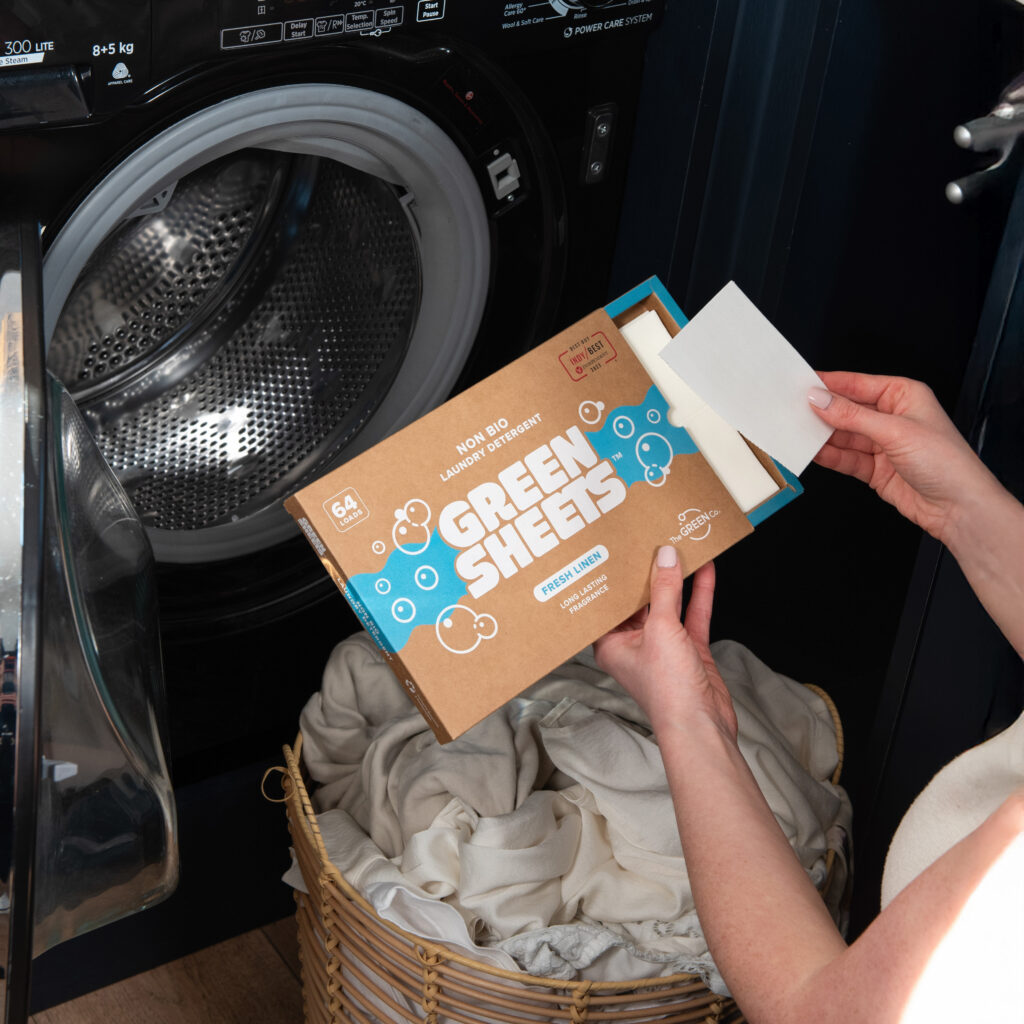
Laundry system for busy families (one tweak that helps)
One small tweak that helps: have a “clean laundry landing spot” (basket or box) so it doesn’t end up on beds and chairs. In our house, for one child, this spot always used to be the floor and then it ended up back in the washing basket.
We also dedicate a little time each week to the washing, so I know Friday morning everyone’s bedding will be ready to go and it gets washed and back on for the weekend. You can’t beat that fresh bedding feeling, and if you are looking for something that is a little gentler on your skin, I would recommend checking out The Green Co.
Their non bio laundry detergent comes in sheet form, rather than pods or gel, and it is not only eco-friendly but is also gentle on skins, so perfect for those with sensitive skin and children. Easy to use too, just 1 sheet per wash, and it dissolves in the machine or even when hand washing within seconds.
Easy win #7: Bathroom + cleaning supplies (small space, big impact)
Quick declutter (expired products + half-used bottles)
Do a quick sweep:
- Bin expired products – Check the dates on those medications you may have stored in your cupboard.
- Combine duplicates where possible
- Be honest about what never gets used – Also a great way though to use up those gift sets for Christmas before you buy any more shower gels!
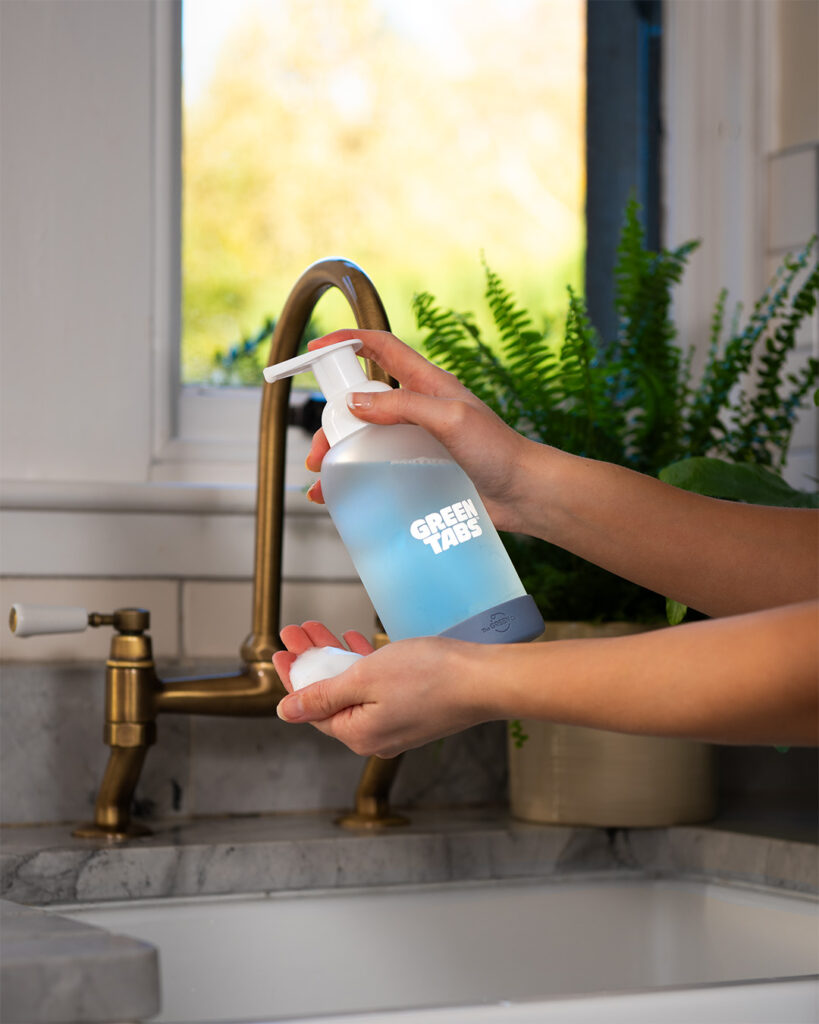
- Refill anything that is running low – Rather than reaching for the one-use plastics in your bathroom, have you considered changing to a refillable soap dispenser? The Green Co do a fab foaming hand soap that is not only gentle on the skin but also the planet too. With a refillable glass bottle, you simply pop in the tablet, add water, and away you go. It uses less per pump, too, which means it lasts longer than liquid soap.
Make mornings easier (basket per person or per routine)
If mornings are chaotic, try a basket system:
- One basket per person
- Or one for “school mornings” essentials
In that basket pop the things that are needed, such as hairbrush, hair bands, deodarant etc. That wa,y there is no minute rush looking for things they need whilst there isa queue for the bathroom.
Cleaning kit “grab and go” setup
Keep a small cleaning kit together (spray, cloths, wipes) so you can do quick cleans without hunting for supplies.
Easy win #8: Two tiny routines that keep your home organised
The 5-minute evening reset (set tomorrow up)
Before bed, do a quick reset:
- Clear the main floor
- Pack bags
- Set out what you can for the morning
The weekly 20-minute reset (pick one day, keep it light)
Pick one day a week for a quick reset:
- Empty the paperwork tray
- Quick fridge check
- Refill snacks/lunch bits
How to get kids and teens involved (without nagging)
A few things that help:
- Give one job each (not “help tidy up”) – Make them take responsibility for the job each day/week.
- Keep it timed (10 minutes) – Technology off and timer done. With everyone on the same page, you will find that the 10 minutes will fly by.
- Let them choose music – Music makes it easier!
- Praise effort, not perfection
New Year home reset checklist (copy, save, or print)
Daily checklist (5 minutes)
- Clear one hotspot surface
- Put laundry in the basket
- Bags packed for tomorrow
- Quick floor tidy in the main room
Weekly checklist (20–30 minutes)
- Sort the paperwork tray
- Reset the snack/lunch area
- Quick toy/gear tidy (return to zones)
- Check the family calendar for the week ahead
One-weekend “home reset” checklist (room-by-room)
- Hallway/entryway drop zone
- Kitchen worktops + lunch/snack cupboard
- Paperwork + calendar
- Kids’ stuff (toys/school/teen gear)
- Bedrooms + laundry system
- Bathroom quick declutter
FAQs about organising your home for the New Year
How do I organise my home when I’m busy?
Keep it small and specific. Pick one area that affects daily life (usually the hallway or kitchen), set a 10–15 minute timer, and do a quick reset. Consistency beats big one-off tidy sessions.
What order should I organise my house in?
For busy families, start with the areas that reduce stress day-to-day:
- Hallway/entryway
- Kitchen
- Paperwork + calendar
- Kids’ clutter
- Bedrooms
- Bathrooms
How do I declutter quickly with kids?
Use a timer and the 3-bag method (keep/donate/bin). Give kids one small job each (for example, “put all Lego in this box”) and stop after 10 minutes so it doesn’t turn into chaos.
How do I keep a house organised with children?
Make it easy to put things away: clear zones, fewer categories, and storage that’s accessible. A short daily reset (5 minutes) is often the difference between “manageable” and “overwhelming”.
How do I organise a teen’s bedroom without arguments?
Agree on a minimum standard (floor clear, laundry in basket, plates out). Give them ownership of their zones (tech, revision, skincare, sports kit) and avoid reorganising their space without them.
What’s the best way to organise paperwork at home (UK)?
A one-tray system works well: everything goes into one tray, then you sort it weekly. Keep key warranties/receipts, important school letters, and medical info — and recycle the rest once it’s actioned.

